Air systems treatment guidelines
osmotized or dermatologically on sensitive skin,
oral mucosa, corneal cells, nasal epithelium and
alveolar cells. Active chlorine released from hypo-
chlorous acid is not listed in any group of substan-
ces monitored and no specific occupational expo-
sure limits have been identified. In the context of
water treatment, for the dosage of the product at
the injection point, the spontaneous loss of active
chlorine and that resulting from the concentration in
water of the species from oxidize: organic substan-
ces, microorganisms, ferrous and manganese ions
and other components. For this reason, the dosage
of the product at the injection point is on average
0.1% corresponding to 1 ml of pro-duct per litre of
treated water (approximately 0.3 ppm). The residual
concentration of the product can be identified by a
common test for the cleaner nation of free chlorine.
In the case of shock sanitation, the product is fed
into water until the concentration of residual free
chlorine of 20-50 mg/l is reached throughout the
plant, including distal points. After a period of con-
tact of 2 hours, with 20 mg/l of active chlorine, or 1
hour, with 50 mg/l of active chlorine, allow the water
to flow into the plant until the level of chlorine does
not return within the concentration limits established
by current regulations (0.2 ppm). In this period of
time, it is absolutely necessary to avoid the use of
the utilities involved in shock sanitation (it is appro-
priate to affix special signs).
Chlorine dioxide
The stabilized solutions of Chlorine Dioxide
WL-SANIFAST are a powerful and effective broad
spectrum bactericidal, virucidal and fungicidal oxi-
dizing agent able to neutralize also sulphates and
other harmful or toxic substan-
ces. WL-SANIFAST is a stable
product, safe when used in com-
pliance with the activation and
the instructions for use, and it is a
very effective alternative to chlo-
rine or hypochlorite, as it does
not has the disadvantages entai-
led by the latter. Unlike the latter,
this product does not release bad
odours, has an excellent residual
activity and, most of all, does not
act by chlorination but by pene-
trating the cell wall of bacteria
and eliminating pathogens. It’s
much more It is much faster than
traditional systems such as gluta-
raldehyde or quaternary salts, it
is stable in a very wide pH range,
and it is also able to attack and
break up the Biofilm; furthermore,
Aspergillus fumigatus
Escherichia coli
Pseudomonas aeruginosa
Salmonella Tiphimurium
Staphylococcus aureus
Canine parvovirus
60 seconds
30 seconds
10 minutes
60 seconds
60 seconds
10 minutes
5 minutes
60 seconds
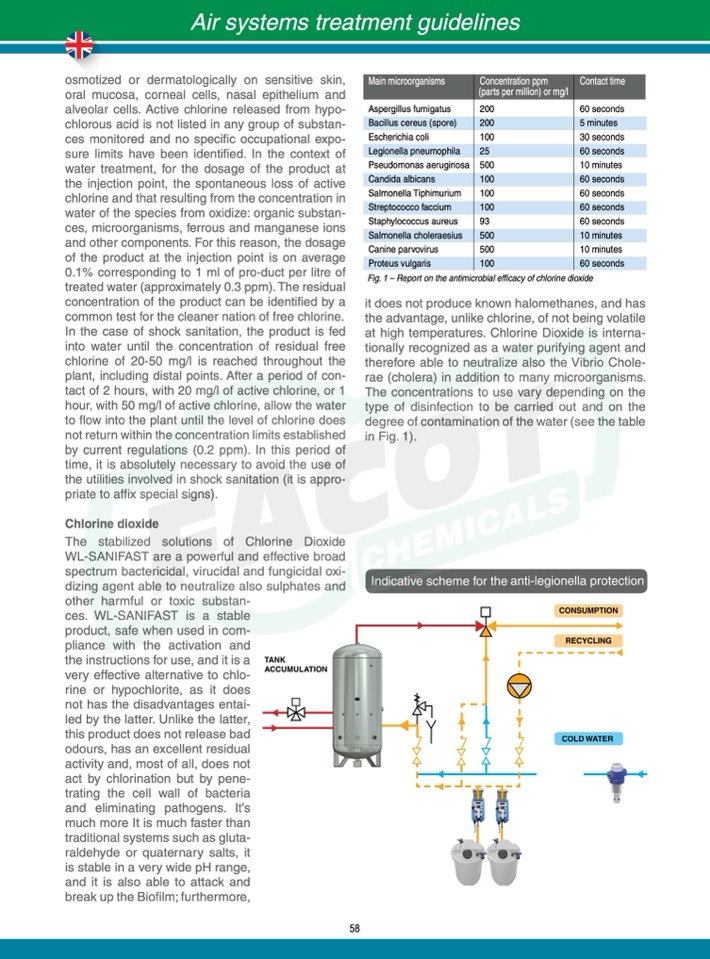
Fig. 1 – Report on the antimicrobial efficacy of chlorine dioxide
it does not produce known halomethanes, and has
the advantage, unlike chlorine, of not being volatile
at high temperatures. Chlorine Dioxide is interna-
tionally recognized as a water purifying agent and
therefore able to neutralize also the Vibrio Chole-
rae (cholera) in addition to many microorganisms.
The concentrations to use vary depending on the
type of disinfection to be carried out and on the
degree of contamination of the water (see the table
in Fig. 1).
58
Main microorganisms
Bacillus cereus (spore)
Legionella pneumophila
Candida albicans
Streptococco faccium
Salmonella choleraesius
Proteus vulgaris
Concentration ppm
(parts per million) or mg/l
200
200
100
25
500
100
100
100
93
500
500
100
Contact time
60 seconds
60 seconds
10 minutes
60 seconds

